RASNZ Lecture Trust

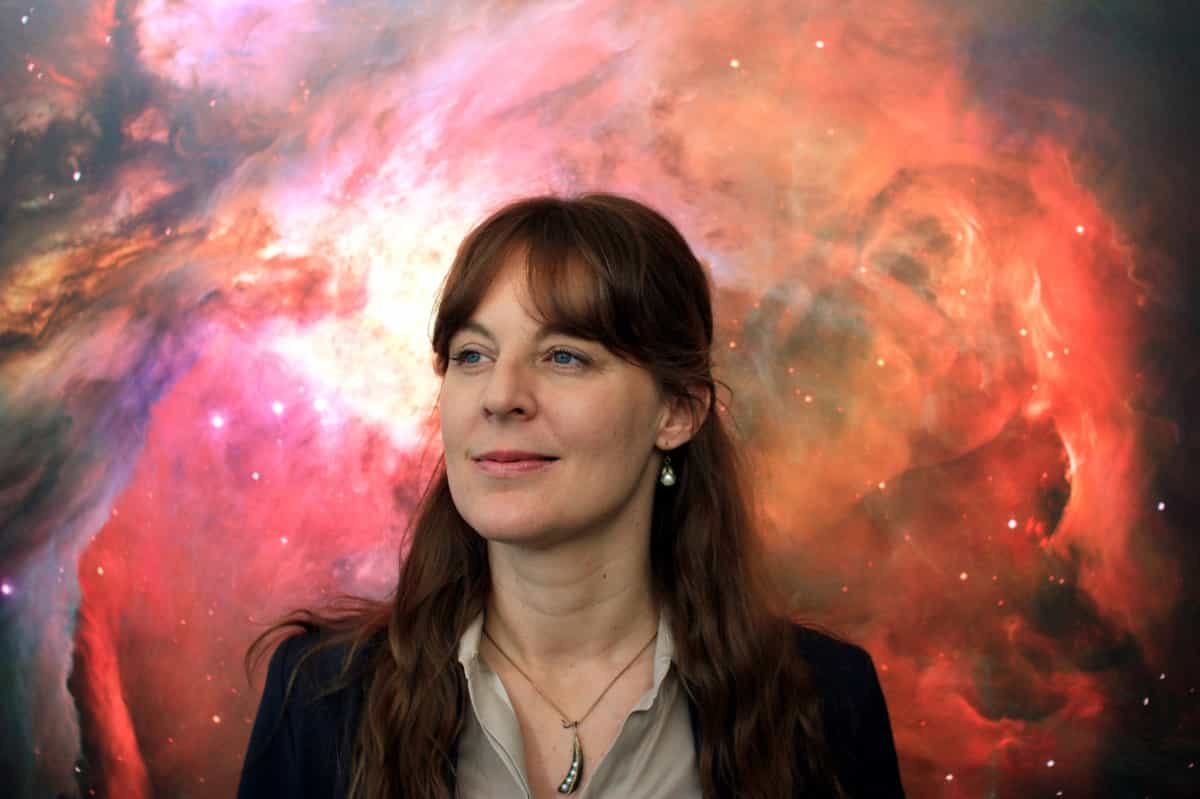
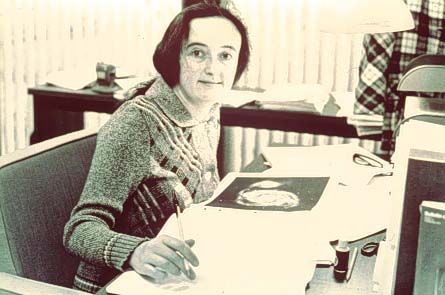
Beatrice Hill Tinsley in 1977

Beatrice Hill Tinsley was a Professor of Astronomy at Yale University when she died, aged 40, of melanoma in 1981. Until she came on the scene, people believed that galaxies were fixed, immobile and unchanging in the universe. She discovered (among many other things) that galaxies are both changing and interacting with one another. She proved that the universe is still evolving.

Born in England, her family came to New Zealand when she was 5. She was educated first in New Plymouth and then at the University of Canterbury. In 1961 she married Brian Tinsley. In 1963 they travelled to the USA, where they remained

Beatrice was celebrated for her work as a synthesiser, the bringing together of apparently unrelated and individual scraps and strands of knowledge and theory, to help create a whole.

These Beatrice Hill Tinsley Lectures are our way of celebrating the life and work of this extraordinarily appealing and altogether remarkable young woman.

The Beatrice Hill Tinsley Lectures are administered by the RASNZ Lecture Trust who may be contacted by email at lecturetrust@rasnz.org.nz.

The RASNZ Lecture Trust is pleased to announce that the 2026 BHT lecturer is Dr. Samantha Lawler.

Astronomy vs. the Billionaire Space Race

In February 2024, hundreds of pounds of potentially lethal debris from a SpaceX Crew Dragon trunk from a private astronaut mission fell on farmland near Regina, Saskatchewan.  Later in the year, a piece of a SpaceX Starlink satellite was found in a lentil field in another part of the province.  In September 2025, one of the handful of Starlink satellites reentering every week was witnessed burning up across the entire western half of Canada, with the reentry ending over Saskatchewan.  Dr. Samantha Lawler of the University of Regina has been studying the proliferation of satellites in orbit over the past few years, and has been stunned to learn how often space debris falls so close to her home.  Come learn why Saskatchewan is the best place in the world to find space debris, and what happens when you find space debris on your farm and silent SpaceX employees show up in a rented truck to be greeted by an astronomer and a dozen of Saskatchewan's finest local journalists.  The billionaire space race is well underway, and this has important implications for international law, the continued operation of satellites in Low Earth Orbit, atmospheric pollution, and the future of astronomy.

Samantha Lawler is a professor of astronomy at the University of Regina in Saskatchewan, Canada. She completed degrees at the California Institute of Technology, Wesleyan University, and the University of British Columbia, followed by postdoctoral fellowships at the University of Victoria (Canada) and NRC-Herzberg Astronomy and Astrophysics Research Centre.  Her discoveries in the Kuiper Belt and predictions for satellite pollution have been featured by BBC, CBC, CNN, NPR, BBC, Scientific American, The New York Times, The Los Angeles Times, Wired Magazine, Nature, and many other international news outlets. She lives on a farm outside Regina and deeply appreciates the beautiful prairie skies.
Lecture dates and locations


North Island February
Date (2026)LocationActivity
Tue 3 FebWhangareiEvening public lecture
Wed 4 FebAucklandEvening public lecture
Thurs 5 FebHamiltonEvening public lecture
Mon 9 FebNapier (Hawke’s Bay)Evening public lecture
Wed 11 FebNew PlymouthEvening public lecture
Thurs 12 FebWairarapaEvening public lecture
Fri 13 FebWellingtonPublic lecture
South Island
Date (2026)LocationActivity
Thurs 26 FebStewart Island / RakiuraTalk hosted by Stewart Island Promotion Association
Sat 28 FebInvercargillEvening public lecture
Thu 5 MarNelsonPublic lecture
Wed 18 MarchChristchurchPublic Lecture UC
Sat 21 MarTekapoEvening public lecture


Questions concerning the BHT Lecture Tour should be addressed to secretarylecturetrust@rasnz.org.nz.

Societies with details to be included here should contact webmaster@rasnz.org.nz

2025: Professor Anna Scaife.

Anna is a Professor of Radio Astronomy at Jodrell Bank Centre for Astrophysics and one of the five inaugural AI Fellows of the UK’s Alan Turing Institute. Previously she has worked at the University of Southampton, the Dublin Institute for Advanced Studies and the University of Cambridge. She has a PhD from the University of Cambridge and an undergraduate degree from the University of Bristol.

She is part of a team working on the Square Kilometre Array (SKA) radio-telescope, and she led the design of the computing and storage for the European SKA Regional Centre. She is currently the UK representative to the International Union of Radio Sciences for Radio Astronomy and Deputy Editor-in-Chief of the Royal Astronomical Society’s Techniques & Instruments (RASTI) journal. 

Anna presented her talk: How Artificial Intelligence is changing the way we do Astronomy - and why that's not necessarily a bad thing.


2024: Associate Professor Lisa Kaltenegger.

Lisa Kaltenegger is the Director of the Carl Sagan Institute for the Search for Life in the Cosmos at Cornell and Associate Professor in Astronomy. She is a pioneer and world-leading expert in modeling potential habitable worlds and their detectable spectral fingerprint. Her research focuses on how to find life on exoplanets circling other stars. Lisa Kaltenegger served among others on the National Science Foundation's Astronomy and Astrophysics Advisory Committee that advises the US Congress, and on NASA's senior review of operating missions. She is a Science Team Member of NASA's planet hunting mission, TESS, as well as the NIRISS instrument on the James Webb Space Telescope. 

Lisa presented her work in a lecture titled Searching for Alien Earths.

2023: Dr. Ryan Ridden.

Ryan is an astrophysicist at the University of Canterbury. He studies some of the largest explosions in the Universe that are caused by exploding stars, colliding stars, and hungry black holes. To study these extreme objects, he uses space telescopes like TESS, and the Hubble Space Telescope, as well as some of the largest telescopes on Earth.  

Ryan presented a lecture titled Cosmic cataclysms: A dynamic and changing Universe.

2021: Dr Heloise Stevence

The RASNZ Lecture Trust are delighted and excited to have Heloise as this years BHT lecturer. She is an energetic, enthusiastic, educational and entertaining speaker well able to reach out to audiences of all ages and levels. Heloise gave excellent presentations at the RASNZ Conference earlier this year and was an obvious choice to swoop in and save the day when Covid-19 scuppered Professor Harvey-Smith's tour. Dr Heloise Stevence enthusiastically accepted the invitation to give the 2021 tour.

The Lecture Tour will take place beginning in the middle of October and will span three weeks. Tour details will be posted here as they come to hand.

Dr Stevence gave the following brief biographical background:Originally born and raised in France, I moved to the UK to study Physics and Astronomy at the University of Sheffield. After working as a support astronomer at the Isaac Newton Group in La Palma for a year, I obtained my Masters of Physics in 2015. I subsequently started a PhD studying the 3D shape of Core Collapse Supernovae, and earned my title in Spring 2019. In July of that year, I joined the University of Auckland as a Research Fellow to research the evolution of massive stars to better understand how they die and produce Supernovae and Kilonovae.

I also started my public outreach work during my doctorate studies, in early 2016, and I have not stopped since.

2019, Babak Tafreshi, photojournalist and science communicator, founder and director of The World At Night program.

Babak gave ten lectures entitled The World at Night: bridging science, art and culture by connecting the Earth & sky in photography.

​​​​​

2018, Dr. Paul Groot, professor of astronomy at Radboud University, Nijmegen, the Netherlands

Dr. Groot gave ten lectures entitled "Dawn of gravitational wave astronomy" giving a little backgound steller evolution to set the scene, then describing the various black hole and neutron star memrgers that have been detected by the LIGO and Virgo gravity wave detectors.

2017, Dr. Natalie Batalha, astrophysicist at NASA Ames Research Center and the Mission Scientist for NASA's Kepler Mission

Dr. Batalha gave seven lectures entitled "A Planet for Goldilocks: The Search for Evidence of Life Beyond Earth" discussing the evidence for life beyond Earth using data from the Kepler Mission.

2016, Dr. Michael Person, Research Astronomer in MIT's Planetary Astronomy Laboratory, and Director of MIT's George R. Wallace Astrophysical Observatory.

He gave nine lectures entitled "The Science of Pluto" discussing the history of Pluto science starting with the discovery of Pluto, through the discovery and characterization of its atmosphere and moons, to provide context to the discoveries of 2015. Focusing on his own experiences aboard the SOFIA aircraft, and the New Horizons flyby, he discussed the explosion of Pluto knowledge during 2015/2016, and its context in our understanding of the outer solar system..

2015, Prof. Gerry Gilmore, Professor of Experimental Philosophy at the Institute of Astronomy, Cambridge University, UK.  His main focus is near-field cosmology. This is the use of precision studies of kinematics, dynamics, stellar populations, chemical abundances, ... for the oldest systems in the local universe to deduce the fundamental properties of structure formation and the nature of dark matter in the early Universe.He gave five lectures, entitled either "Gaia: mapping the Milky Way from Space", or "Astronomy, Cosmology and the Big Questions in Nature ".

2014, Prof. Tamara Davis, physics honours and post graduate coursework coordinator at the School of Mathematics and Physics, University of Queensland, is a cosmologist interested in investigating new fundamental physics such as the properties of dark energy, dark matter and the mass of the neutrino.She gave ten lectures; four of which were to school students, entitled either "The Dark Side", or "Cosmological Confusion".  

2013, Dr. Karen Masters is an Astronomy researcher at the Institute of Cosmology and Gravitation, University of Portsmouth, UK.  She’s the Project Scientist for Galaxy Zoo, and also involved in the Sloan Digital Sky Survey (especially MaNGA).  She’s also a member of the Dark Energy Survey and Euclid.  She gave five lectures entitled "A Zoo of Galaxies".​​​​​​​

2012, Prof. Clive Ruggles, Emeritus Professor of Archaeoastronomy at the University of Leicester, UK.He gave four lectures entitled "Ancient Astronomies - Ancient Worlds".